
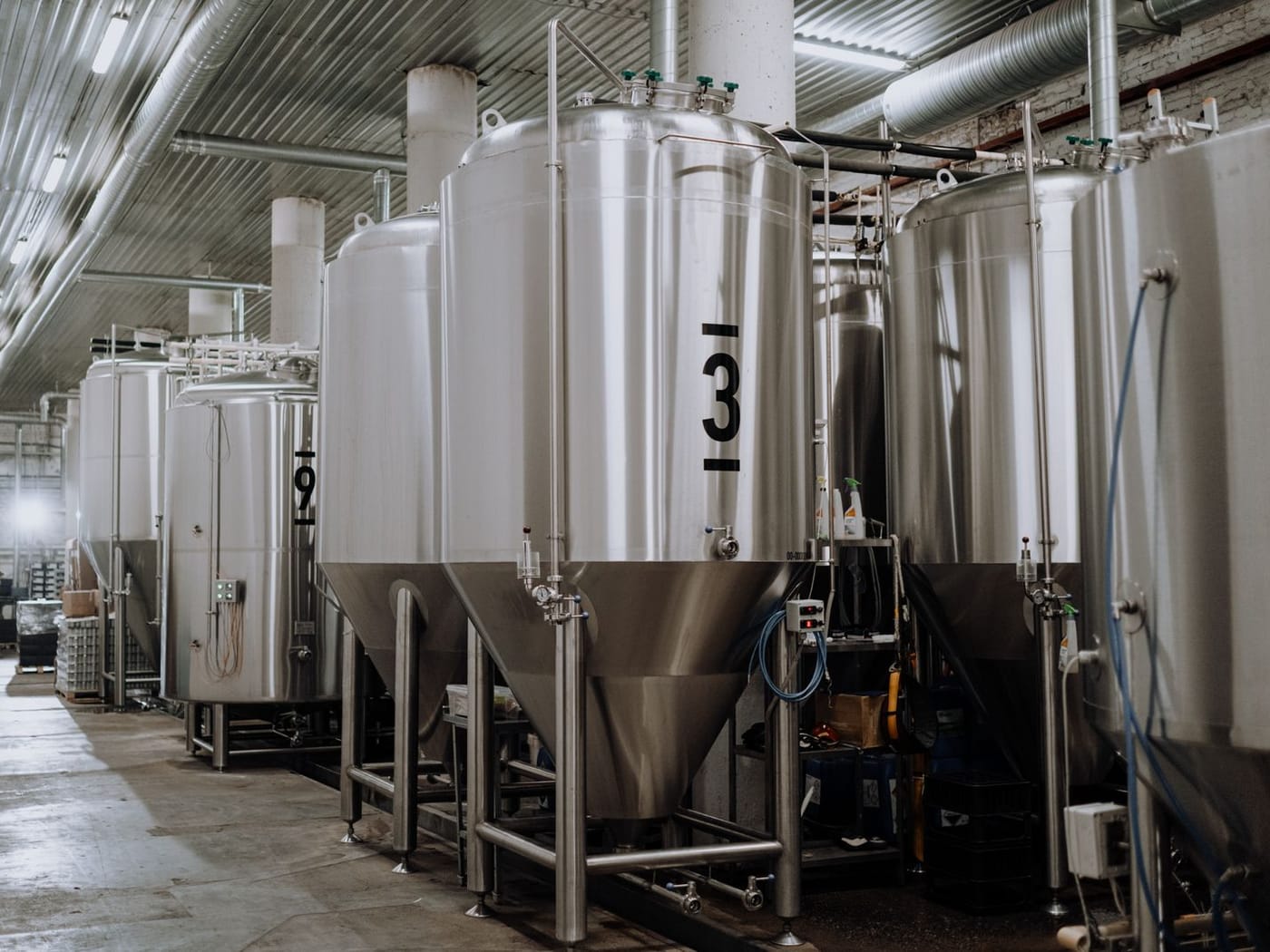
Choosing a brewhouse is one of the most important equipment decisions when establishing or expanding a brewery.
The size and configuration of the brewhouse influence production planning, equipment requirements, facility layout, staffing and capital investment.
A system that is too small for the intended business may require frequent brewing cycles to meet demand. A system that is significantly larger than required may result in unnecessary capital expenditure and underutilized equipment.
The goal is to select a brewhouse that aligns with the brewery's realistic production requirements and commercial objectives.
1. Understanding Brewhouse Capacity
Brewhouse capacity is generally expressed as the nominal volume of wort produced per brewing batch, subject to the manufacturer's specific definition.
In the United States, brewhouse capacities are commonly expressed in US beer barrels.
One US beer barrel equals approximately 117.35 litres.
For reference:
| Brewhouse | Approximate Nominal Volume |
|---|---|
| 5 BBL | 587 litres |
| 7 BBL | 822 litres |
| 10 BBL | 1,173 litres |
| 20 BBL | 2,347 litres |
| 40 BBL | 4,694 litres |
| 80 BBL | 9,388 litres |
These are approximate conversions based on US beer barrels. Actual equipment specifications should confirm the nominal capacity definition and applicable measurement standard.
Brewhouse capacity should not be confused with packaged beer yield or total brewery output.
2. The 5 BBL Brewhouse
Compact Capacity for Smaller Brewing Operations
A 5 BBL brewhouse can be suitable for businesses planning relatively small production batches.
Potential applications include:
- Brewpubs
- Smaller microbreweries
- Hospitality-based brewing operations
- Businesses testing a local brewing market
A smaller brewhouse may offer advantages where facility space or initial production requirements are limited.
However, operators should consider whether the brewing frequency required to meet demand is practical.
3. The 7 BBL Brewhouse
An Intermediate Capacity Option
A 7 BBL brewhouse offers a capacity between the commonly considered 5 BBL and 10 BBL configurations.
It may be suitable for brewery businesses seeking a moderate increase in batch size without moving immediately to a larger system.
Potential applications include:
- Brewpubs with established sales expectations
- Microbreweries with moderate production requirements
- Craft brewery projects requiring an intermediate capacity
The suitability of this configuration depends on demand, brewing frequency, tank capacity and the intended business model.
4. The 10 BBL Brewhouse
Greater Batch Capacity for Developing Brewery Businesses
A 10 BBL brewhouse may be appropriate for businesses planning higher production volumes or a more extensive distribution model.
Potential applications include:
- Craft production breweries
- Brewpubs with higher expected consumption
- Breweries supplying multiple customer locations
- Businesses planning a broader product portfolio
A larger batch size can reduce the number of brews required to produce a given volume, but the overall benefit depends on the brewery's operating schedule and equipment configuration.
5. Standardized vs. Custom Brewhouses
Brootopia offers standardized Plug-n-Play brewhouses in 5 BBL, 7 BBL and 10 BBL configurations.
These provide defined starting points for brewery projects while allowing customization according to customer requirements.
When to Consider a Standardized Configuration
A standardized system may be appropriate when:
- The required capacity aligns with an available standard model
- The project can accommodate the proposed equipment configuration
- The customer prefers a defined starting point for equipment selection
- Required modifications can be incorporated into the standard design
When to Consider a Custom Brewery Plant
A custom solution may be appropriate when:
- The required capacity falls outside the standard configurations
- The facility has specific layout constraints
- The brewing process requires a particular vessel or equipment arrangement
- The project involves specialized operational requirements
- The brewery has specific expansion or integration objectives
Brootopia offers customized brewery plant solutions within its 5–80 BBL brewhouse range.
6. Calculate Your Production Requirements
A useful starting point is to estimate the beer volume the business expects to sell.
Consider:
- Expected monthly or annual demand
- Number of beer styles
- Average fermentation and maturation time
- Planned brewing days
- Number of brews possible per day
- Tank availability
- Expected process and packaging losses
For illustration, a nominal 10 BBL brewhouse producing eight batches per month represents 80 BBL of nominal monthly brewhouse volume.
That figure does not represent guaranteed saleable beer output.
Actual production will depend on operational and process factors.
7. Don't Overlook Fermentation Capacity
A brewhouse cannot operate effectively in isolation.
Fermentation tank availability can become a production constraint even when the brewhouse has sufficient brewing capacity.
For example, a brewery producing beers that require longer maturation periods may need additional tank capacity compared with a brewery producing products with shorter production cycles.
Fermentation capacity, tank sizing and scheduling should therefore be considered alongside brewhouse selection.
8. Consider Automation and Operating Requirements
The appropriate level of automation depends on the brewery's production scale, budget, staffing model and operating preferences.
Consider:
- Process control requirements
- Operator involvement
- Cleaning and sanitation procedures
- Temperature monitoring
- Production repeatability
- Maintenance accessibility
- System integration
Automation should be evaluated in terms of practical operational requirements rather than as a feature in isolation.
9. Plan for Future Growth
Future demand is difficult to predict precisely, but expansion possibilities should be considered during initial equipment planning.
Relevant questions include:
- Can additional fermentation tanks be accommodated?
- Is sufficient utility capacity available?
- Does the facility allow future equipment installation?
- Will the brewhouse support the intended production schedule?
- What investments may be required if demand increases?
Conclusion: Choose the Brewhouse That Fits the Business
The best brewhouse is not necessarily the largest or most sophisticated system.
It is the system that appropriately supports the brewery's production requirements, operational model and investment plan.
Brootopia's standardized 5 BBL, 7 BBL and 10 BBL Plug-n-Play configurations offer practical starting points, while our custom brewery solutions provide flexibility for more specific requirements.