
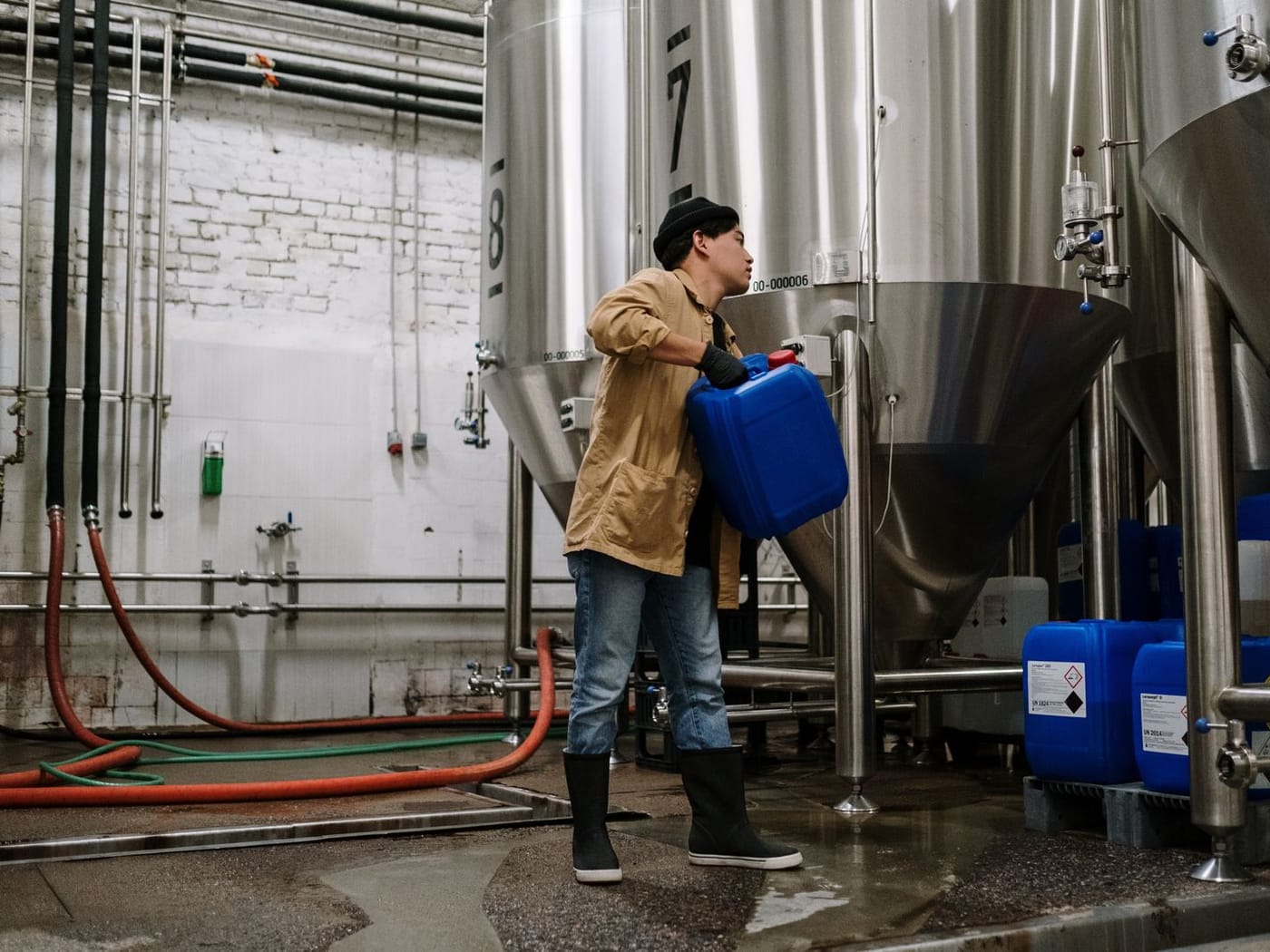
Installing the right brewing equipment is only the beginning of running a brewery.
Once production begins, the business must coordinate brewing schedules, raw materials, personnel, equipment maintenance, quality procedures and finished beer availability.
These activities require clear responsibilities, consistent processes and effective communication.
For brewery owners, developing a structured operational approach can be just as important as selecting the right brewhouse.
1. Establish Clear Operational Responsibilities
A brewery may require several different operational functions depending on its size and business model.
These can include:
- Brewing and production
- Quality management
- Raw material handling
- Equipment cleaning and sanitation
- Maintenance coordination
- Inventory administration
- Packaging and dispatch
- Production reporting
In smaller breweries, one individual may perform multiple responsibilities.
In larger operations, these functions may be assigned to dedicated personnel or teams.
Regardless of the organizational structure, responsibilities should be clearly defined.
2. Build a Practical Production Schedule
Production planning should begin with expected sales requirements and available production capacity.
The schedule should account for:
- Planned brewing batches
- Beer styles
- Fermentation duration
- Maturation requirements
- Tank availability
- Cleaning and turnaround time
- Raw material availability
- Packaging or serving requirements
A production schedule should be realistic rather than based solely on theoretical brewhouse capacity.
For example, the number of batches a brewery can produce may be limited by fermentation tank availability even when the brewhouse has additional operating capacity.
3. Understand the Role of Brewing Personnel
Brewers are responsible for much more than operating the brewhouse.
Depending on their roles and experience, brewing personnel may be involved in:
- Production preparation
- Brewing operations
- Fermentation monitoring
- Cleaning and sanitation
- Production documentation
- Raw material coordination
- Equipment checks
- Process consistency
The required staffing model depends on production scale, equipment automation, operating hours and the complexity of the beer portfolio.
Brootopia provides brewing personnel and operational support as part of its managed brewery services.
4. Develop Standard Operating Procedures
Standard Operating Procedures, or SOPs, provide documented guidance for recurring operational activities.
A brewery may develop SOPs covering:
Brewing Operations
Preparation, process steps, monitoring and production records.
Cleaning and Sanitation
Cleaning schedules, approved procedures, chemical handling and verification requirements.
Fermentation Management
Monitoring responsibilities, process records and defined operating parameters.
Equipment Operation
Startup, shutdown, inspection and safe operating procedures.
Material Handling
Receiving, storage, identification and movement of raw materials and finished products.
SOPs should be appropriate to the brewery's equipment, processes and applicable regulatory requirements.
They should also be reviewed and updated as operations change.
5. Prioritize Quality and Process Consistency
Consistency is essential for maintaining a dependable brewery operation.
Brewing businesses should establish appropriate controls for:
- Raw material quality
- Process measurements
- Fermentation monitoring
- Cleaning effectiveness
- Product traceability
- Finished product evaluation
- Recordkeeping
The exact quality programme depends on the brewery's products, processes and market requirements.
Appropriate technical expertise and testing procedures should be incorporated into the operating model.
6. Coordinate Maintenance and Equipment Care
Even well-designed brewery equipment requires regular inspection and maintenance.
A maintenance programme should consider:
- Manufacturer recommendations
- Equipment operating hours
- Pumps and mechanical components
- Valves, seals and fittings
- Electrical and control systems
- Heating and cooling equipment
- Safety devices
- Cleaning and calibration requirements
Preventive maintenance can help identify issues before they develop into more significant operational disruptions.
7. Connect Production with Inventory and Procurement
Brewing schedules and supply chain activities should be coordinated.
Production personnel need visibility into the availability of ingredients, packaging materials and other required supplies.
Similarly, procurement teams need accurate information about planned production volumes and delivery requirements.
Poor communication between these functions can result in avoidable delays or excess inventory.
8. Use Meaningful Operational Information
Breweries can benefit from regularly reviewing selected operational indicators.
Examples include:
- Planned versus completed brewing batches
- Production volume
- Tank utilization
- Process losses
- Equipment downtime
- Raw material consumption
- Production schedule adherence
These indicators should be defined consistently and interpreted in the context of the brewery's operating model.
9. Consider Managed Operational Support
Not every brewery owner wants to manage all production-related responsibilities personally.
Professional support may be useful for businesses that require brewing personnel, operational coordination or additional industry expertise.
Brootopia's managed services are delivered through its own team, with support from independent industry experts where required.
The scope of operational support can be discussed according to the brewery's specific requirements.
Conclusion: Effective Operations Require More Than Equipment
A brewery operates best when its people, processes and equipment work together.
Clear responsibilities, realistic production schedules, appropriate quality procedures and coordinated business functions provide a stronger foundation for day-to-day operations.
At Brootopia, we combine brewery infrastructure expertise with managed operational support to help businesses address both sides of brewery ownership.